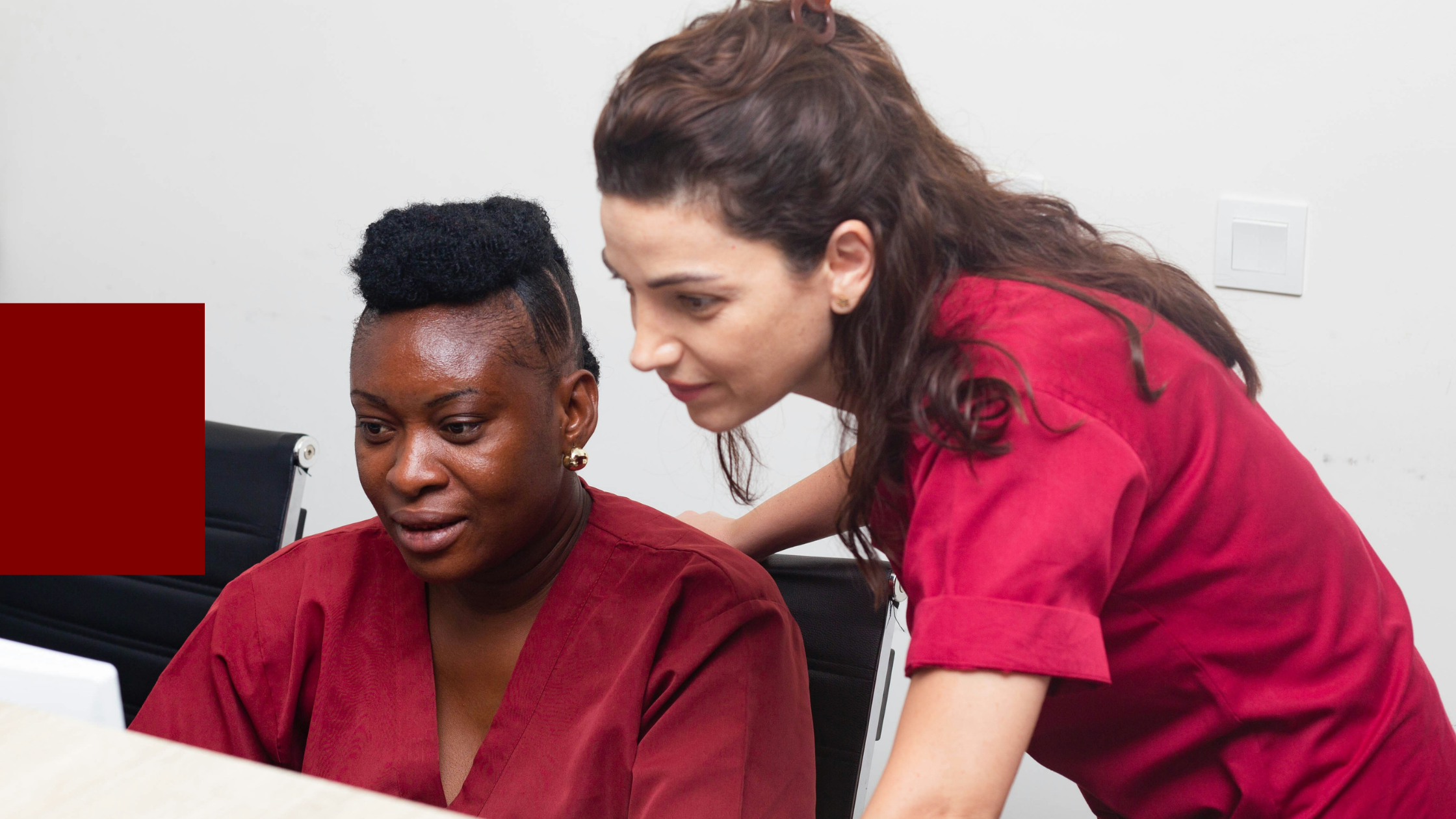
When most people imagine a career in healthcare, they immediately think of doctors, nurses, or pharmacists. But here at the college we know healthcare is a huge and constantly evolving field, filled with meaningful careers that often receive far less attention.
Many of these professionals work directly with patients, while others perform essential behind-the-scenes work that keeps clinics, hospitals, laboratories, pharmacies, and long-term care facilities running safely and efficiently.
If you’re feeling drawn to healthcare but aren’t sure what path is best, don’t worry, we can help. Whether you are beginning your career, considering a career change, or looking to build on your existing experience, here are 10 healthcare careers you may not have considered. Some of the careers listed below you can pursue right here at the Canadian College of Healthcare and Pharmaceutics.
1. Phlebotomist
If you have ever had blood drawn for a medical test, you have probably met a phlebotomist.
Phlebotomists are trained to collect blood samples safely and accurately. They help prepare specimens for testing, follow infection-control procedures, label and document samples, and support patients who may feel nervous about needles.
This career can be a great fit for someone who is calm, detail-oriented, compassionate, and comfortable working closely with people. It’s one of our most popular programs
here at the college.
2. Medical Radiation Technologist
Medical radiation technologists, sometimes informally called X-ray technicians, produce diagnostic images that help healthcare professionals identify injuries and medical conditions.
Depending on their education and specialization, these professionals may work with X-rays, computed tomography scans, mammography, magnetic resonance imaging, or radiation therapy. It can be an exciting path for someone interested in healthcare, technology, anatomy, and problem-solving.
3. Medical Laboratory Assistant
Many important healthcare decisions begin in a laboratory.
Medical laboratory assistants help collect, prepare, organize, and process patient specimens such as blood, tissue, and other biological samples. They may also enter patient information, maintain equipment, prepare testing materials, and support medical laboratory technologists.
This behind-the-scenes career is ideal for people who appreciate accuracy, organization, science, and structured work.
4. Medical Device Reprocessing Technician
Every reusable medical instrument must be properly cleaned, disinfected, inspected, packaged, sterilized, and stored before it can be used again.
Medical device reprocessing technicians perform this essential work in hospitals, surgical centres, dental offices, and other healthcare facilities. Although patients may rarely meet them, their work plays an important role in infection prevention and patient safety.
5. Pharmacy Assistant
Pharmacy assistants help pharmacists and pharmacy technicians manage the daily operations of a pharmacy.
Their responsibilities may include processing prescriptions, entering information, managing inventory, preparing labels, communicating with patients, handling payments, and completing administrative tasks. Pharmacy assistants can work in community pharmacies, hospitals, long-term care pharmacies, specialty pharmacies, and other healthcare environments.
6. Electrocardiogram Technician
An electrocardiogram, commonly known as an ECG or EKG, records the electrical activity of a patient’s heart.
ECG technicians prepare patients for testing, correctly position electrodes, operate diagnostic equipment, and help produce accurate recordings for assessment by qualified healthcare professionals.
This career combines patient interaction with medical technology and may be a good option for someone interested in cardiovascular health. We have a strong ECG program at the college, which you can
read about here.
7. Hospital Unit Clerk
Hospital unit clerks help keep busy healthcare departments organized.
They may answer phones, update patient records, coordinate appointments and tests, communicate with different departments, prepare paperwork, and support nurses, physicians, patients, and families. Because they are often at the centre of communication within a hospital unit, strong organization and interpersonal skills are extremely important.
8. Wound Care Professional
Wound care is a specialized area of healthcare focused on assessing, treating, and managing acute and chronic wounds.
Depending on their professional background and scope of practice, trained healthcare professionals may support patients experiencing surgical wounds, pressure injuries, burns, diabetic foot ulcers, or other complex skin conditions.
Additional wound care education can be especially valuable for nurses, personal support workers, physiotherapists, and other professionals who regularly support patients with skin and wound concerns. Check out our Introduction to
Wound Care program here.
9. Personal Support Worker
Personal support workers provide hands-on assistance to older adults, people with disabilities, individuals recovering from illness, and others who need help with daily living.
Their work may include personal care, mobility assistance, meal preparation, light housekeeping, companionship, and support with routines. PSWs can work in long-term care homes, hospitals, retirement residences, community agencies, and private homes. As the population in Canada continues to age, PSWs are becoming increasingly vital to the future of healthcare. We have regular PSW intakes starting here in Toronto,
read more here.10. Healthcare Office Administrator
Healthcare facilities depend on skilled administrative professionals to keep their operations running smoothly.
Healthcare office administrators may schedule appointments, manage health records, communicate with patients, process forms, coordinate referrals, handle billing documentation, and support healthcare teams. This career can be a strong choice for someone who wants to work in healthcare without necessarily providing hands-on clinical care. You can learn more about our
Healthcare Management Program here.
If one of these careers has piqued your interest, but you’re still not sure what’s the right path, that’s ok! Our team of Academic Advisors are always standing by to help talk through your experiences and goals.
Click here to schedule a free call with them.